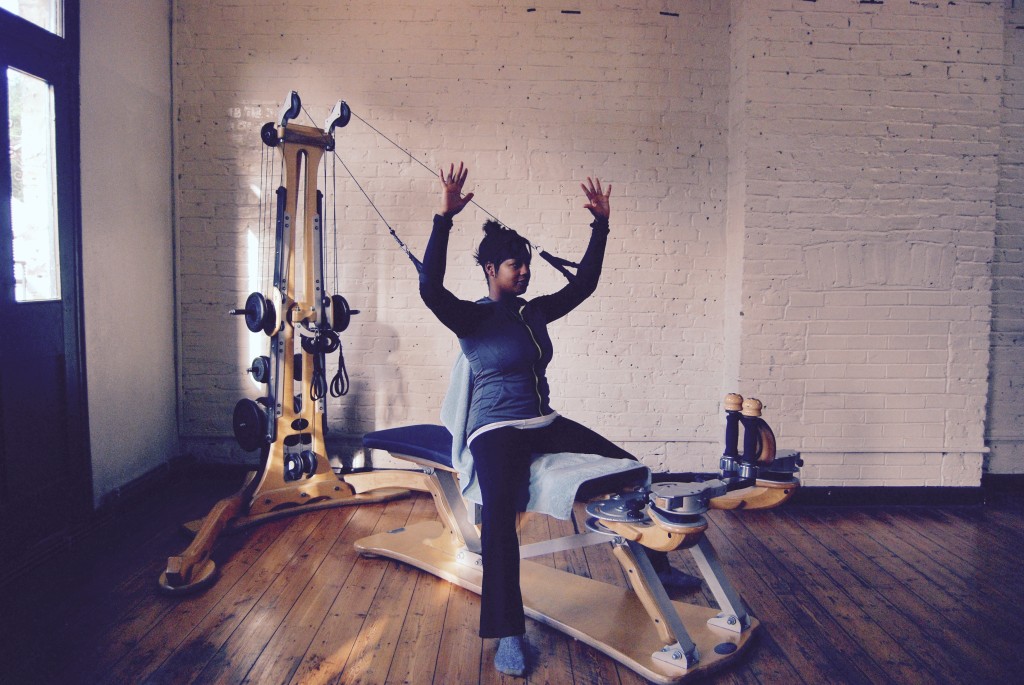
Here are a few tips my dance clients receive during and after a GYROTONIC® class that I would like to share.
These tips are essentially all taught during a dance class, however, private and semi-private training allows an individual to focus on the areas that need more improvement to provide even more depth and clarity.
Private or small group training also allows the individual to understand their own body and in their own time. Although these tips and suggestions are a few out of many, it provides an idea of what goes on in a GYROTONIC® class and how it can be beneficial to further improve dance performance.

Maintain a Neutral Pelvis
Often times dancers (well, anyone) tend to have either posterior or anterior tilt in the pelvis, in which they also tend to use during movement. While moving in this way may appear successful, problems and injuries that may occur (i.e. stiff hips and back) is, of course, not very useful to maintain longevity.
A dancer can avoid this common mistake by maintaining a neutral pelvis, especially while standing. This connection can help provide the dancer a great way to practice and ‘preparation’ (the moment before you begin to move).
An example of a pelvis that’s not in neutral is when a dancer is ‘tucking’ or arching in the lower back. So when this happens, when the working leg comes back into a position, the rotation muscles aren’t able to engage properly. When this leg movement is done properly with a neutral pelvis this means that the inner thighs and abdominals get the chance to work.
Therefore, I encourage dancers to practice maintaining a neutral pelvis (and spine) before a class/performance by either doing homework given from the sessions or a few tendus and pliés with the same principle.

Rotate the Whole Leg
Another common sight in dancers is over rotation, of the foot in relation to the rest of the leg. While this may be aesthetically pleasing, this often means that true rotation is not being used. This is especially important in plies and tendus.
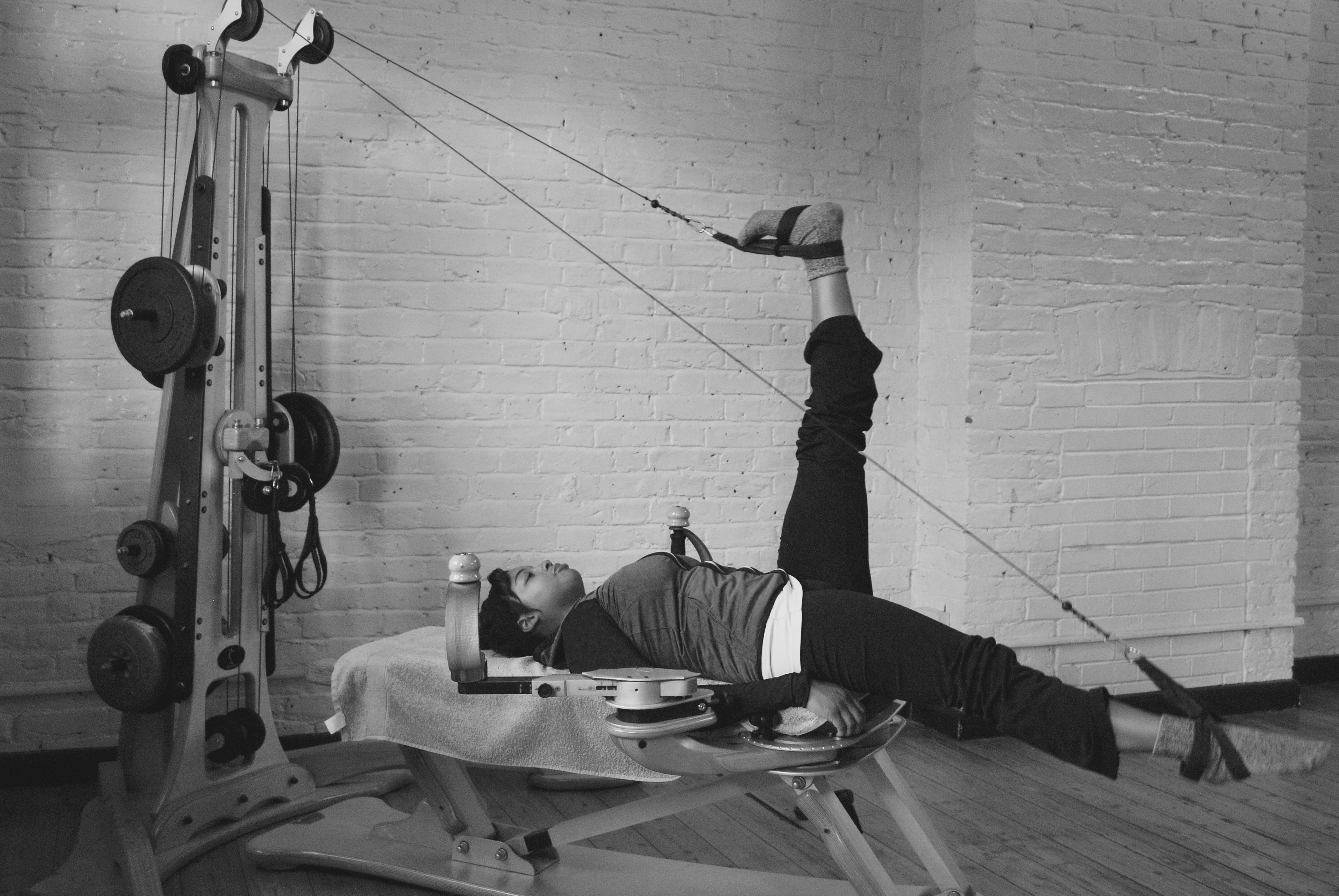
Using rotation the of the whole leg is will also help avoid injuries such as knee and ankle problems. In the Gyrotonic hamstring exercises, clients are able to work on proper rotation (both internal and external) lying down which reduces pressure in the spine and allows more freedom in the hip. This way, the body can be more prepared when standing.
During the hamstring exercises, it is reiterated to use energy through the entire leg to rotate from the hip, where the foot and toes will follow. Maintaining this connection will help to engage the appropriate muscles and therefore improve turn out.
I advise my clients to take time before class, especially those with hips problems/ pain, to warm up the turn out muscles by practicing the corrections and homework exercises learned from our sessions. This way the dancer can notice when old habits come back or when the pelvis tends to move unnecessarily as mentioned above.


[…] Take Home Tips #1: For Dancers by Kindall Payne […]